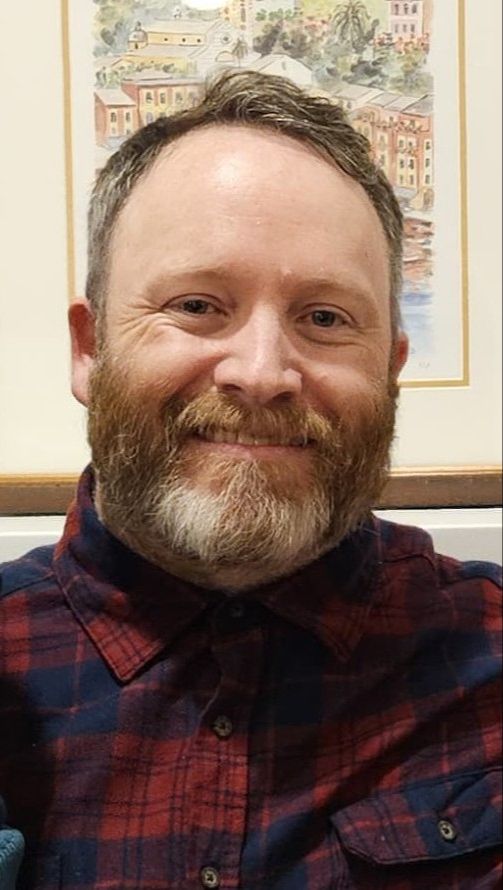
Hi, I'm Colin McDannel.
My driving philosophy in life has been to have a positive impact by helping others. When I was younger I worked in education and mental health as I learned more about myself and my strengths. Everything changed when I suffered a major injury and almost died. As a Physical Therapist I specialize in treating chronic pain, but I also live with it daily, and I want to use all of my experience to help you.
My Story
The road I took to where I am now was not direct. But I wouldn't be here without each step along the way.
My time as a math tutor and undergraduate teaching assistant taught me patience and how to explain things in different ways so people can understand.
Working as a home school teacher and PE teacher at a school for children with special needs made me realize that education on its own wasn't the right direction, I was more interested in the therapeutic aspect of helping.
As I provided behavior therapy it cemented in my mind that I was on the right track and I began to apply to graduate school for social work.
I had no idea one incident was about to send me down a different path.
The Injury
One day while jumping on a trampoline a kid I worked with fell on my knee and I felt a "pop." What followed was close to a year of lots of doctors appointments, lots of questions, lots of pain, and no answers.
I was in my late 20s, unable to walk without a cane, unable to sit except in certain positions, unable to get by without pain medication, and unable to enjoy life.
At one point I when I was able to get approval for a second opinion the doctor told me I had an injury to the hard or soft tissues of my knee (we only have hard and soft tissue in our body) and it might get better on it's own in the next two weeks to two years or it might never get better.
I felt so frustrated that he essentially told me nothing with a bunch of fancy words.
This was a major turning point for me, it was when I decided that I needed to learn more about my body. I started learning more about anatomy so I could ask my physical therapist and doctor better questions about my treatment.
I didn't realize it at the time but this was my first step down the road to becoming a physical therapist.
As we exhausted diagnostic and treatment options my doctor finally figured out what was wrong and I had surgery on my knee. It was GREAT!
Within 2 days I was walking without assistance, decreasing my medication, everything was going great...until I woke up one night in excruciating pain, saw my knee had swollen to the size of a cantaloupe, and rushed to the ER.
The Aftermath
I spent the next several days in the hospital waiting for bacteria cultures to come back. I didn't know if I was going to lose my leg, or if I was going to need to call my friends to come say goodbye to me in the hospital before I died.
Luckily, the bacteria was something treatable with IV antibiotics, I had two surgeries to clear out the infection, and I was discharged with a plan to have a nurse come by my house every day for the next 3 weeks until the infection was gone.
Unluckily, later that night I started feeling off and feeling pain at the site of the long term IV. When I got back to the ER I was readmitted because they thought I was about to have a stroke and I spent those 3 weeks in the PCU.
By the time I left I had lost 40 lbs, could barely move my knee, and was back to using a cane but I was ready and motivated to get moving.
Getting Started
When I first got back into physical therapy after getting out of the hospital I got easily frustrated. The amount of pain I was in and the lack of endurance I had were such a big change from where I was before.
I wanted to get better so I felt like I needed to push harder, even when I was well beyond my limits.
But it was counterproductive, and eventually I started having other injuries pile up. I started having back pain and nerve pain in my other leg from walking too far with a limp. I ignored that my arm was getting sore from using the cane and irritated a nerve in my neck, causing two of the fingers in my left hand to go numb.
I felt like I was in a double bind. I wanted to get stronger but I felt like it was so easy to overdo it and flare things up.
I had to learn to pay close attention to what my body was telling me. To learn what each type of pain meant, whether I needed to stop right now or could keep going a little further. To make sure I didn't ignore one part while watching another.
I started making progress, it was slow, but steady. Then I had one doctors appointment that almost brought everything down.
Turning Point
I was at a follow up appointment to see my surgeon and I thought everything had been going well. I had found a rhythm to managing all of my different areas of pain and was seeing progress with my exercise routine.
He saw things different, he told me that I shouldn't put much hope in more of a recovery. He told me that I would probably be using a cane for the rest of my life, that I would never be able to get off the opiate medication I was on, and that I would be lucky to be able to hold down a desk job.
To put it lightly I was pissed.
That wasn't the life I saw for myself and wasn't what I was working towards.
After the appointment I went on my daily walk as part of my exercise routine. I lived in Southern California at the time and would walk on a trail near the beach I used to go running on before the injury.
I watched people run by me and thought, "If he says that's my future, what would it hurt to run."
So I ran 50 feet, and it hurt, but after walking for a bit longer the pain went back down.
So I ran a little bit more, and after walking for a bit it went back down.
After a few more times I finished up my walk, I was a little bit more sore than usual but not that much.
I realized that if my surgeon was wrong about my limits then I was only one who could figure out how far I could go.
I wasn't going to let his opinion hold me back and I was going to work as hard as I could to keep improving
Switching Gears
When I went in to PT the next day I felt like a little kid who was about to be scolded. I told my PT what I did and she encouraged me to keep going.
She gave me some resources to learn more about Pain Neuroscience, I learned more about how my brain worked, and decided to take my life in a different direction.
As I finished my rehab I began looking at PT school requirements and got a job as a PT clinic tech when I was able to get back to work in order to start learning before starting school.
I spent my weekends in class all day doing accelerated pre-req courses in order on top of working full time and was accepted into PT school at the University of St. Augustine.
Where's the Pain Science?
When I got to PT school I was overjoyed, I was finally going to learn how to help people recover from injuries the way I had been helped.
But as I went further into my program I began to realize a lot of the pain neuroscience concepts I had learned before school weren't actually part of the curriculum.
Some of my professors were aware of this new research and incorporated it into our lessons but many weren't.
On internships and as a new grad I found success with patients that others found "tough" simply because I had this knowledge that should have been part of the curriculum.
I began to take on these more complicated cases, partially because I enjoyed the challenge, but mostly because I was happy that I was able to provide successful outcomes that others couldn't.
Growing as a Clinician
Soon I was presented with an opportunity to teach a group class for people with chronic pain and I jumped on it.
Every 6 weeks I would have a group of around 15 patients with everything from Complex Regional Pain Syndrome of the foot to multi-level cervical fusions and everything in-between. We worked for 2 hours, 4 days a week, and by the end of the program everyone had a full body exercise routine.
During that time I saw the concepts of Pain Neuroscience work in action for hundreds of people from all backgrounds and situations. Everyone came at them a little different, but they were able to see improvement.
One of the things that stuck out to me most was that everyone there had tried multiple treatments before, whether that was physical/occupational therapy, massage, chiropractic, acupuncture, etc.
Often patients would ask, "Why didn't I learn this stuff earlier?"
And I honestly didn't have a good answer for them.
From working with students as a clinical instructor and mentoring new graduates I know that schools are starting to incorporate some of this information, but not all of it.
Most clinicians struggle to help people with chronic pain, not because they don't want to, but because that wasn't the focus of their education.
Why I Created Restorative Road
That's why I founded Restorative Road.
I got tired of having patients tell me "I wish I found you sooner."
So I needed a way to spread my reach further, to have the biggest impact I could.
People with chronic pain also don't need the same thing as someone with a freshly sprained ankle or who is just out of shoulder surgery.
With education on pain science and the right guided exercise routine everyone has the ability to improve.
I've been there, I know it's tough, but if you take your time, put one foot in front of the other, you'll get where you want to be.